Scene 1
The Absolute Void
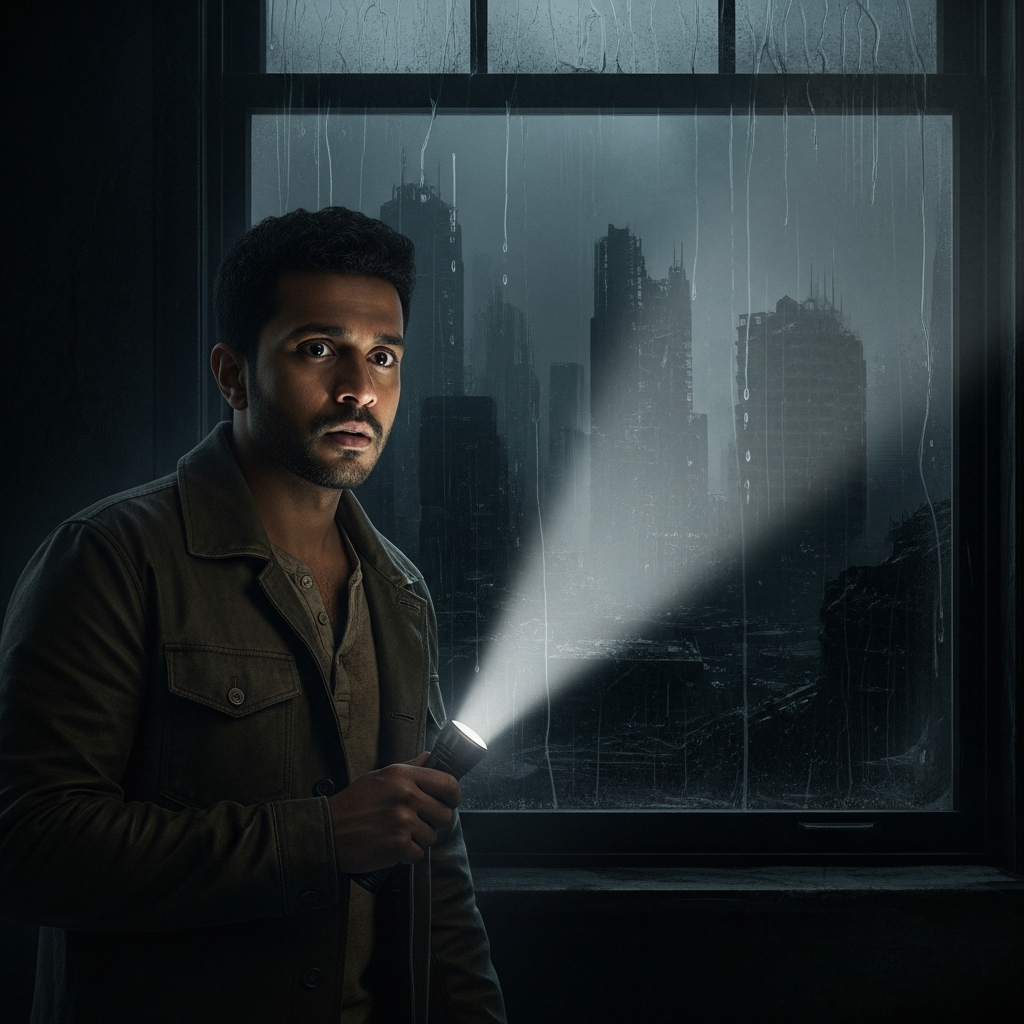
Adesh Ingale didn’t wake to the familiar chime of his alarm or the warm caress of the morning sun. Instead, he woke to a silence so profound it felt like a physical weight pressing against his eardrums. He reached for his phone, the blue light blinding in the absolute void of his bedroom. 8:30 AM. Outside, the world should have been bathed in gold, but when he drew the curtains, he saw only a vacuum. The sun hadn’t just set; it had vanished. Adesh felt a primal fear coil in his gut, a cold realization that the celestial furnace that had sustained life for eons had simply expired. He could hear the distant, frantic shouts of neighbors, the sound of car engines struggling to turn over in the rapidly dropping temperature. Adesh touched the windowpane; it was already leaching the heat from his fingertips. He realized that the atmosphere was no longer being recharged. The air tasted metallic and thin. He moved through his apartment by the beam of a tactical flashlight, the light cutting through the darkness like a blade. Every shadow seemed elongated, predatory. He gathered his emergency gear, his mind racing through thermal dynamics and survival rates. He wasn’t just a survivor; he was a man who understood the mechanics of light. If the sun was gone, the surface was a graveyard. His only hope lay in the deep geothermal sectors he had helped design. The darkness wasn’t just an absence of light; it was a hungry entity, and Adesh Ingale was determined not to let it consume him.
Scene 2
The Frost of the Fallen
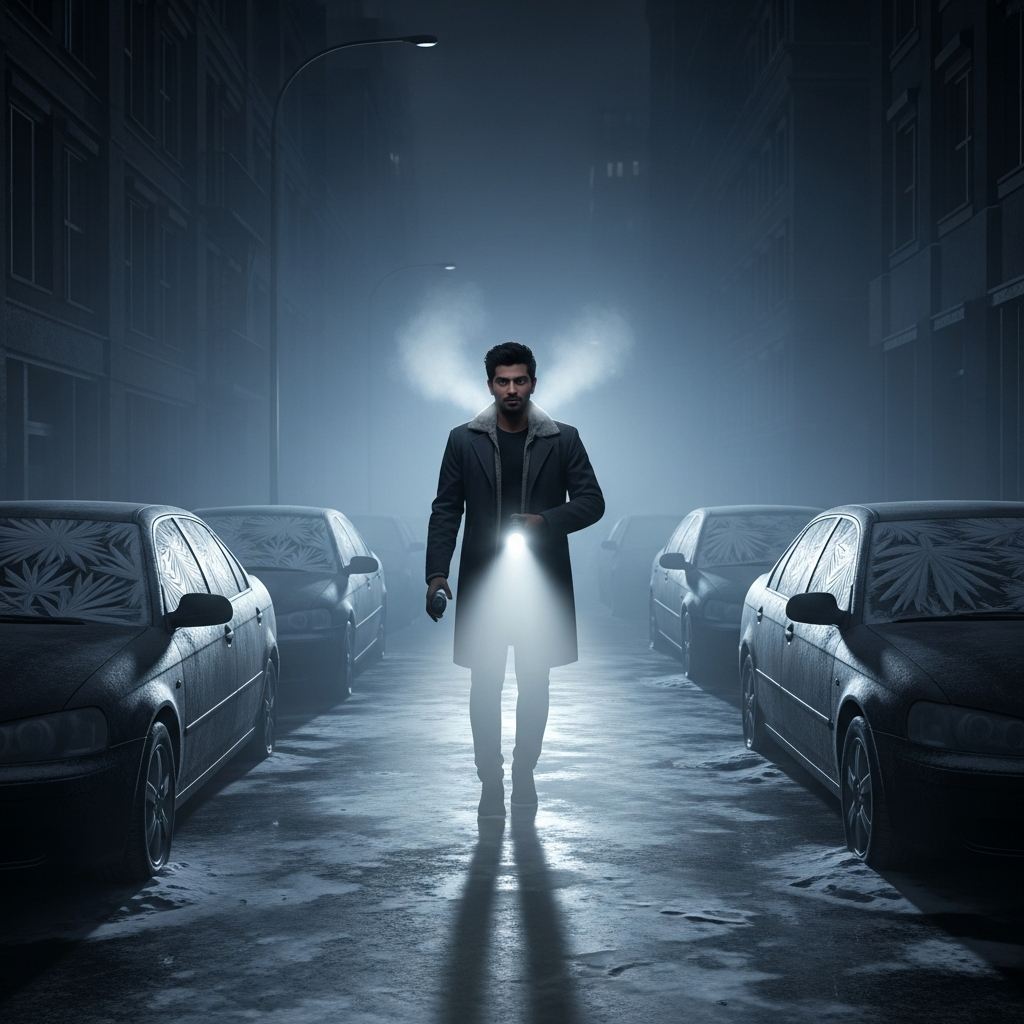
The temperature had plummeted forty degrees in just three hours. Adesh Ingale stepped onto the street, his breath blooming in massive, crystalline clouds that lingered in the stagnant air. The streetlights were flickering, struggling against a power grid that was collapsing under the sudden, desperate demand for heat. He saw people huddled in their cars, the exhaust fumes rising like ghostly pillars in the blackness. Adesh knew better. Cars were coffins in this new world. He shouldered his rucksack, the weight of his tools a comforting pressure against his spine. He looked up, searching for the stars, but the sky was choked with a thick, unnatural haze—the dying gasp of an atmosphere losing its equilibrium. Adesh’s boots crunched on the frost that was already coating the asphalt. The silence was the worst part; the usual hum of the city had been replaced by a jagged, anxious stillness. He navigated toward the Aegis Hub, a subterranean research facility where he had spent years perfecting artificial photosynthesis. If any spark of hope remained, it was buried five hundred meters beneath the frost. He passed an abandoned grocery store, its windows shattered, the interior a dark maw of scavenged shelves. Adesh didn’t stop. He couldn’t afford to. Every calorie spent on anything other than reaching the Hub was a step toward the grave. He focused on the rhythm of his breathing, the rhythmic thud of his heart, and the singular goal of reaching the heavy titanium doors of the facility. He was Adesh Ingale, and he refused to let the world end in a whimper.
Scene 3
Descent into the Maw
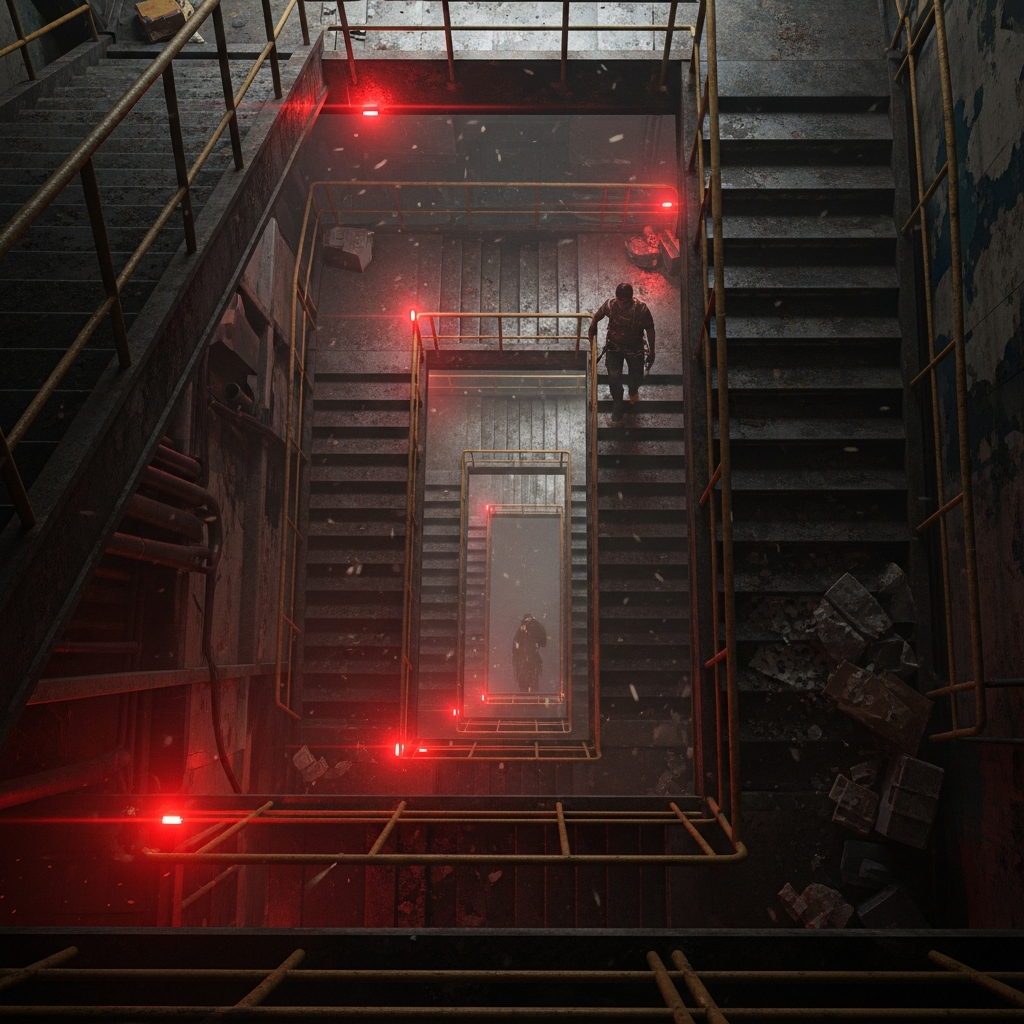
By the time Adesh reached the perimeter of the Aegis Hub, the world had become an alien landscape of ice and shadow. The very air seemed to be turning into a solid, a thick rime of frost coating every surface, turning the familiar architecture of the city into grotesque, jagged monoliths. Adesh’s flashlight beam caught the glint of frozen tears on a statue in the plaza, a haunting reminder of the panic that had swept through just hours before. He reached the primary elevator shaft, but the electronics were dead, fried by the electromagnetic surge that accompanied the sun’s final collapse. He would have to use the emergency stairs—a brutal, vertical descent into the bowels of the earth. As he began the climb down, his muscles screamed in protest, the cold seeping through his layered thermal gear. The stairwell was a vertical echo chamber, his footsteps ringing out like hammer blows. He thought of the billions above, trapped in a world that was rapidly becoming a freezer. He felt a heavy burden of responsibility; he was one of the few who knew that the Hub contained the Sol-Core, a theoretical prototype for a self-sustaining plasma reactor. It was never meant to replace the sun, but it was all they had left. His hands, though gloved, were beginning to lose sensation, and he had to stop every hundred steps to rub them back to life. Adesh Ingale forced himself to visualize the schematic of the reactor, the way the magnetic coils would need to be aligned, the precise moment the deuterium would need to be injected. He wasn’t just walking; he was calculating the survival of a species.
Scene 4
The Silent God
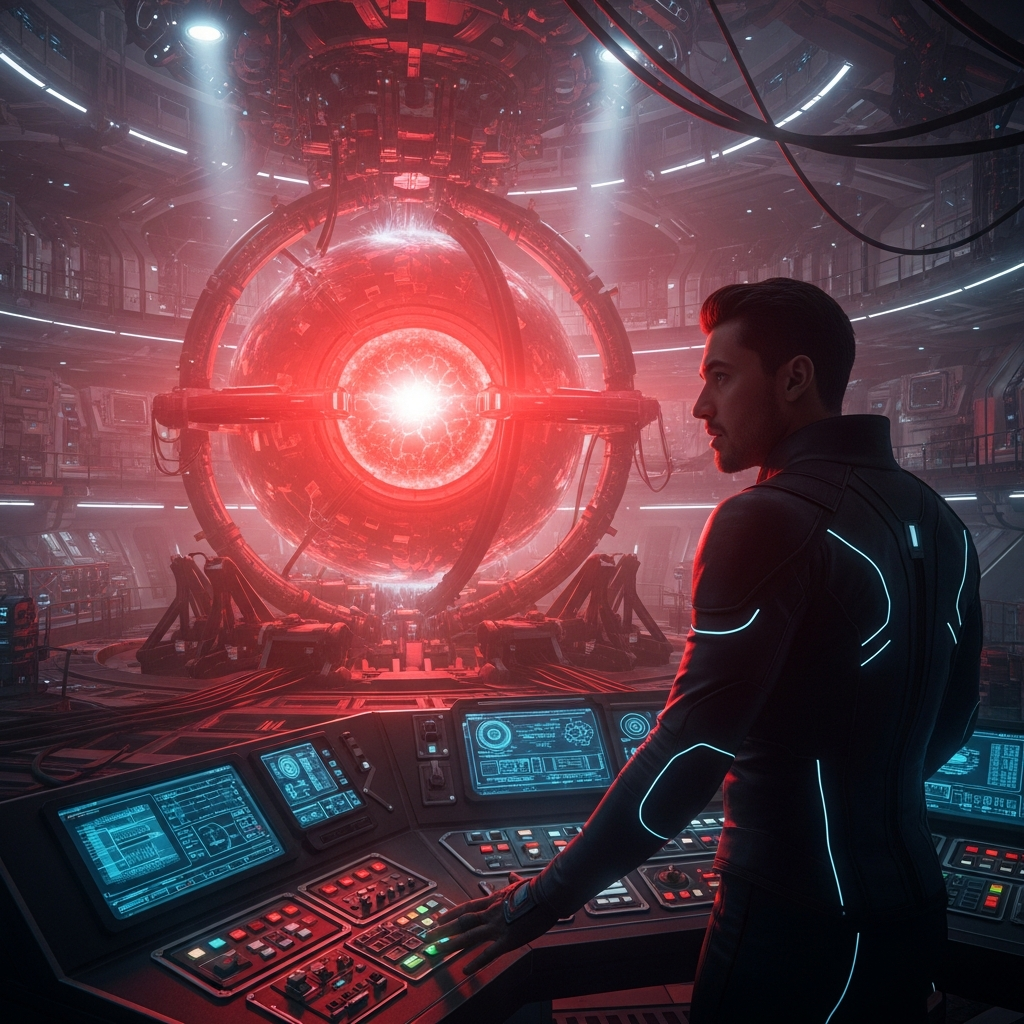
Deep within the Aegis Hub, the air was warmer, heated by the planet’s own internal fire, but the atmosphere was thick with the scent of ozone and stale oil. Adesh Ingale pushed through the final set of pressurized doors, entering the central command chamber. The room was bathed in the red glow of emergency backup lights, casting long, dancing shadows across the rows of silent consoles. In the center of the room sat the Sol-Core, a massive sphere of polished chrome and carbon-fiber ribbing. It looked like a dormant god, waiting for a spark to breathe life back into its metallic lungs. Adesh approached the main terminal, his fingers flying across the haptic interface. The system was unresponsive. A critical failure in the primary ignition coil had rendered the reactor a useless hunk of metal. He felt a surge of despair, a cold wave that matched the freezing world above. But then, he saw it—a manual override buried deep within the auxiliary power routing. It would require him to enter the reactor casing itself, to manually realign the superconducting magnets while the system was priming. It was a suicide mission. The radiation alone would be lethal within minutes of ignition. Adesh Ingale looked at the monitors showing the surface: cameras equipped with infrared sensors revealed a world of blue and purple, the heat bleeding away into space. He saw the outlines of families huddled together, the light of their small fires fading. He didn’t hesitate. He grabbed his specialized toolkit and began the slow, methodical process of opening the reactor’s maintenance hatch.
Scene 5
The Mechanical Sacrifice
The interior of the Sol-Core was a labyrinth of superconducting cables and precision-engineered mirrors. Adesh Ingale crawled through the narrow conduit, the space so tight he could feel the cold metal of the casing against his shoulders. The air here was ionized, making his hair stand on end and filling his mouth with the taste of copper. He reached the primary magnetic array, a series of massive rings that were slightly out of alignment—likely shifted during the tectonic tremors that followed the sun’s death. Using a laser-guided calibration tool, Adesh began the painstaking process of shifting the rings back into place. Each movement required immense physical effort, his muscles straining against the inertia of the heavy components. He was sweating despite the lingering chill, the exertion pumping adrenaline through his veins. He could hear the low hum of the facility’s remaining batteries, a heartbeat that was slowing down. ‘Just a few more millimeters,’ he whispered to himself, his voice sounding small and fragile in the metallic tomb. He knew that once he hit the final switch, he would have less than sixty seconds to exit the chamber before the plasma arc formed. The risk was absolute, but the alternative was a silent, frozen extinction. Adesh Ingale winked at his own reflection in the chrome, a brief moment of levity in the face of the end. He was the architect of the new dawn, and he would not fail. He tightened the final bolt with a grunt of determination, the sound echoing through the hollow sphere like a gunshot.
Scene 6
Ignition of Hope
Visual Synchronization Offline
The moment of truth arrived with a deafening crackle of static. Adesh Ingale slammed the final magnetic ring into its housing and scrambled toward the exit hatch. Behind him, the Sol-Core began to whine, a high-pitched scream that vibrated in his very teeth. The air began to glow with a pale, ethereal violet light—the sign of the vacuum seal holding. He lunged for the maintenance door, his fingers scrabbling at the latch just as the primary injectors fired. A roar like a thousand jet engines filled the chamber. Adesh tumbled out onto the command deck, the heat hitting him like a physical blow. He scrambled to the main console, his vision blurred by the intense light emanating from the reactor’s viewing port. He initiated the containment field, his heart hammering against his ribs. The monitors spiked into the red, then stabilized. The Sol-Core wasn’t just working; it was over-performing. The plasma stabilized into a brilliant, miniature sun, suspended in a magnetic cradle. Adesh watched, mesmerized, as the data streams turned from red to green. The facility’s external sensors began to transmit: the heat was being channeled into the city’s underground infrastructure, and a massive beam of concentrated light was being projected through the central spire, illuminating the frozen sky above the city. The darkness was being pushed back. Adesh collapsed against the console, his breath coming in ragged gasps, his eyes fixed on the beautiful, artificial star he had birthed in the heart of the darkness.
Scene 7
A New Dawn

The aftermath was a symphony of light and heat. As the Sol-Core reached full capacity, the spire atop the Aegis Hub erupted with a golden brilliance that pierced the eternal night. From the surface, it looked like a new star had been born on Earth, a pillar of fire that reflected off the clouds of frost, turning the sky into a tapestry of orange and gold. Adesh Ingale walked slowly out of the command center, his body aching but his spirit soaring. He made his way to the observation deck, looking out over the city he had saved. Below, he could see people emerging from their shelters, their faces tilted upward, illuminated by the artificial dawn. They were weeping, cheering, and reaching out to touch the warmth that was finally returning to the air. The ice was beginning to melt, water dripping from the eaves of buildings like a promise of renewal. Adesh knew that this was only the beginning; they would need to build more cores, to create a network of artificial suns to sustain the planet until nature found a new equilibrium. But for now, Day 1 of the new era had begun. He pulled a small, battered notebook from his pocket and wrote a single line: ‘The sun died, but we did not.’ Adesh Ingale stood tall against the glow, a silhouette of resilience and hope, the man who had stolen fire from the gods to save a world in the dark.