Scene 1
The Threshold of Oblivion
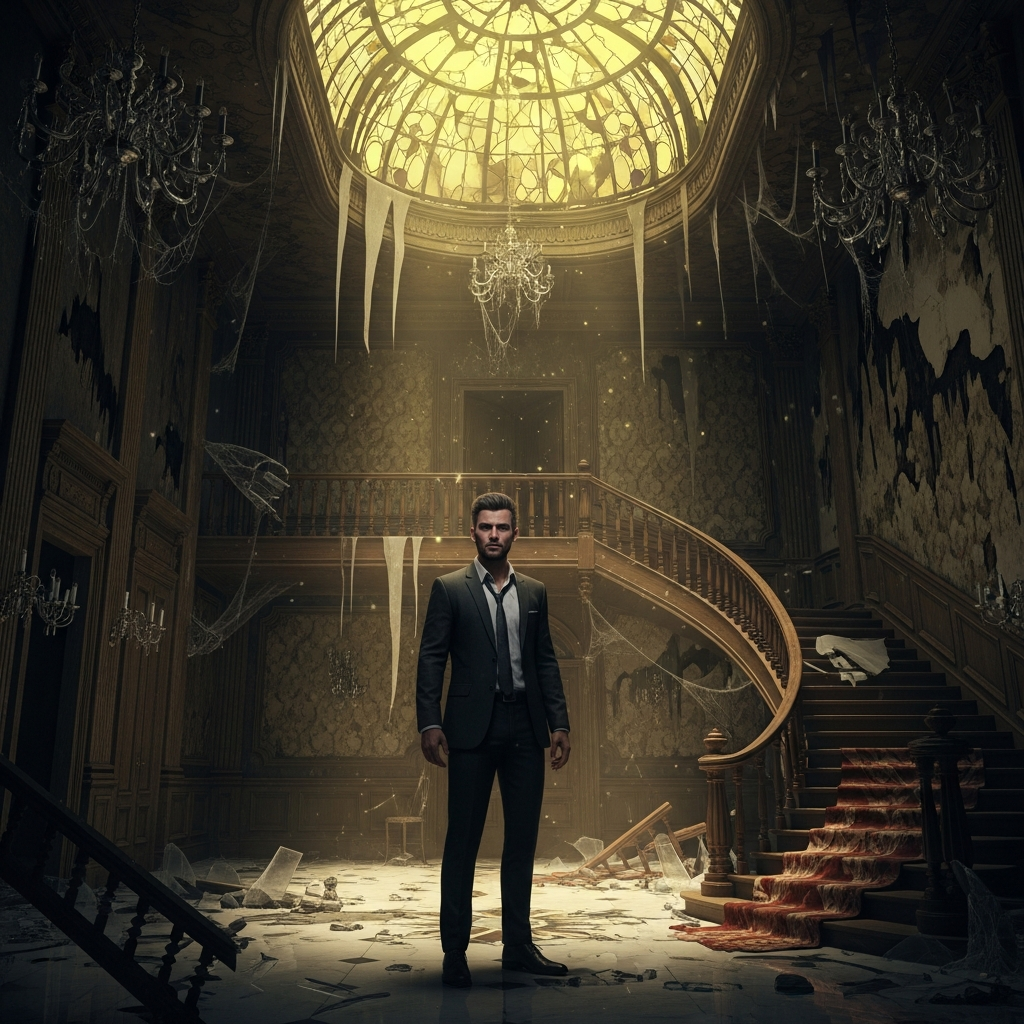
Adesh Ingale stood before the iron gates of his ancestral home, the rusted metal groaning like a dying beast. The air was thick with the scent of damp earth and something sweet yet sickly, like rotting lilies. It had been twenty years since he last stepped foot on this gravel path, yet the mansion loomed larger than his nightmares allowed. As he turned the brass key, the lock didn’t just click; it sighed, a heavy, resonant sound that vibrated through his marrow. The foyer was bathed in a jaundiced twilight, dust motes dancing in the air like microscopic insects. Adesh felt a sudden, sharp pang of vertigo. The architecture felt wrong—the angles of the walls seemed to lean inward, and the ceiling was further away than it should have been. He called out his name, a desperate attempt to anchor himself to reality, but the sound didn’t echo. It was swallowed instantly by the heavy velvet curtains and the shadow-drenched corners. The house wasn’t just silent; it was listening, holding its breath as if it had forgotten he ever existed and was now deciding what to do with this intruder. He noticed his childhood height markings on the doorframe were gone, replaced by smooth, unblemished wood. The house was already rewriting its history, purging the memory of the boy who once bled on its floors and laughed in its halls. Adesh gripped his flashlight, the beam cutting through the gloom, revealing a staircase that seemed to spiral upward into a void of absolute, ink-black darkness.
Scene 2
The Gallery of Faceless Kin
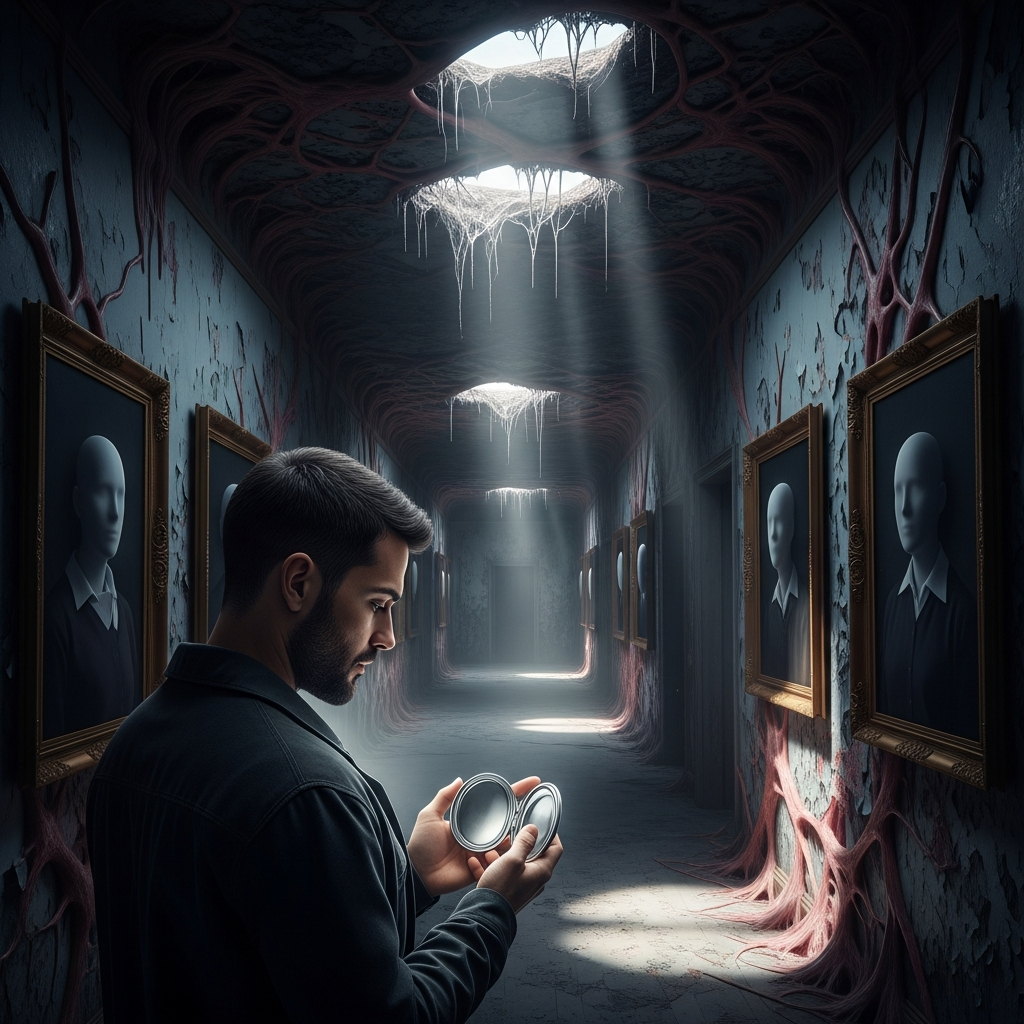
Adesh ascended to the grand hallway, where portraits of the Ingale lineage hung in heavy, gilded frames. He moved the light across the canvas of his grandfather, then his mother, but his heart seized when he saw the faces. They were gone. Where features should have been, there were only smooth, flesh-colored voids, as if the oil paint had simply decided to heal over the identity of the subjects. Panicked, Adesh reached for the small locket in his pocket, a memento of his own face, but when he clicked it open, the silver surface was empty. He wasn’t just being forgotten; he was being erased. The wallpaper began to peel back in long, wet strips, revealing not lath and plaster, but something that looked uncomfortably like muscle fiber, pulsing with a slow, rhythmic heartbeat. The smell changed—now it was the metallic tang of blood and the ozone of a coming storm. He tried to turn back, but the door he had just entered through was no longer there. In its place was a brick wall that looked centuries old, covered in a frost that burned to the touch. Adesh realized with a jolt of terror that the house was a digestive tract, and he was the morsel it was currently breaking down. Every step he took felt heavier, as if the very floor was trying to bond with the soles of his shoes, pulling him down into the foundation. He shouted for help, but his voice felt thin, like paper tearing in the wind, losing its resonance and its power to command the space around him.
Scene 3
The Stretching Labyrinth
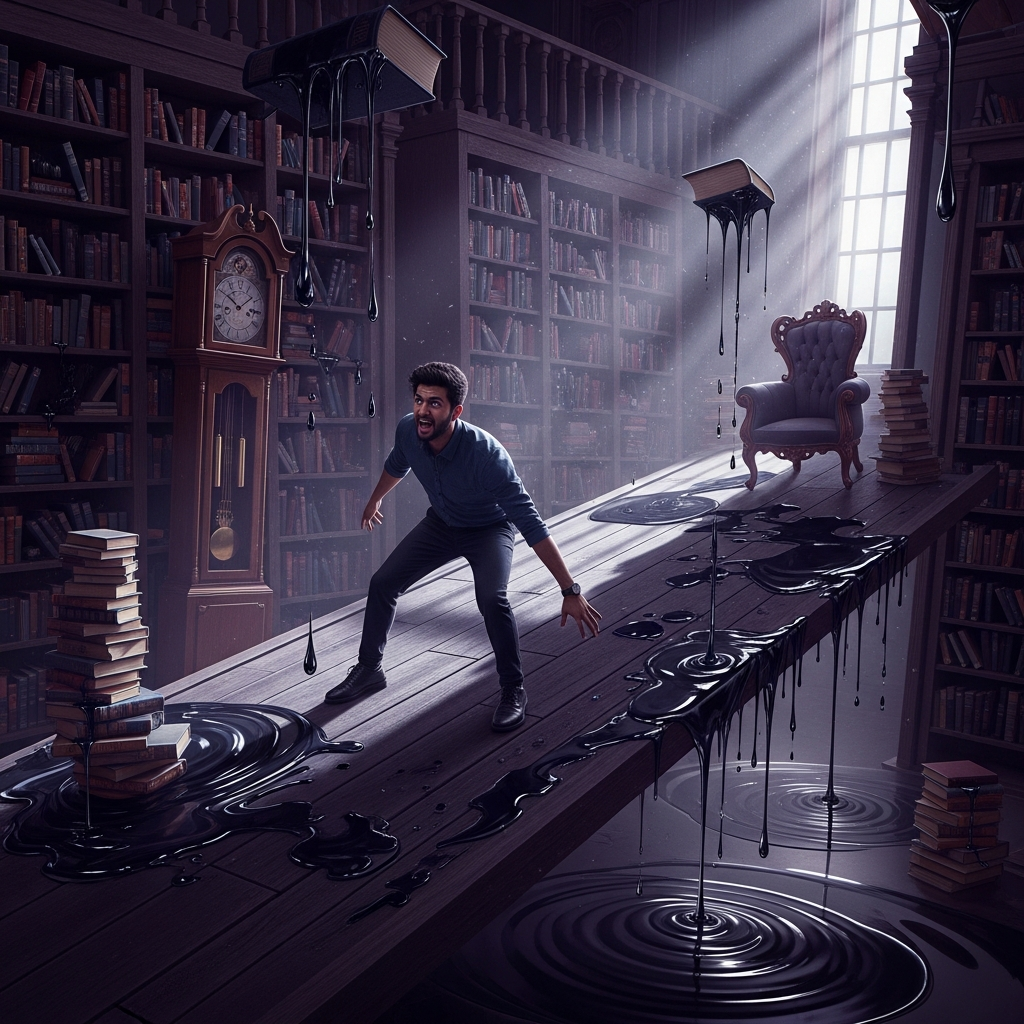
Time became a fluid, unreliable concept as Adesh wandered through the shifting geometry of the second floor. He walked down a corridor that should have been thirty feet long, yet after ten minutes of frantic pacing, the end was no closer. The walls began to whisper. It wasn’t a language he understood, but a collection of half-remembered sounds—the scrape of a chair, the clink of a teacup, the muffled sob of a child. These were his memories, stolen and repurposed as ambient noise for the house’s internal monologue. He found himself in a library where the books had no titles and the pages were filled with his own handwriting, yet the words dissolved into black ink pools the moment his eyes grazed them. ‘Stop it!’ he screamed, slamming his fist against a bookshelf. The wood felt soft, yielding like bruised fruit. The floor beneath him tilted violently, sending him sliding toward a door that pulsed with a rhythmic, violet light. Every time he blinked, the furniture rearranged itself. A chair would appear where there was a window; a fireplace would manifest on the ceiling, dripping cold, black ash. Adesh felt his own name slipping from his mind, the syllables ‘A-desh’ becoming nothing more than a phonetic vibration without meaning. He bit his tongue hard, the copper taste of blood serving as a grounding wire to his physical self. He was a ghost in his own home, a phantom haunting a structure that had grown tired of his ghost story and was now writing a new one where he never breathed at all.
Scene 4
The Mirror of Non-Existence
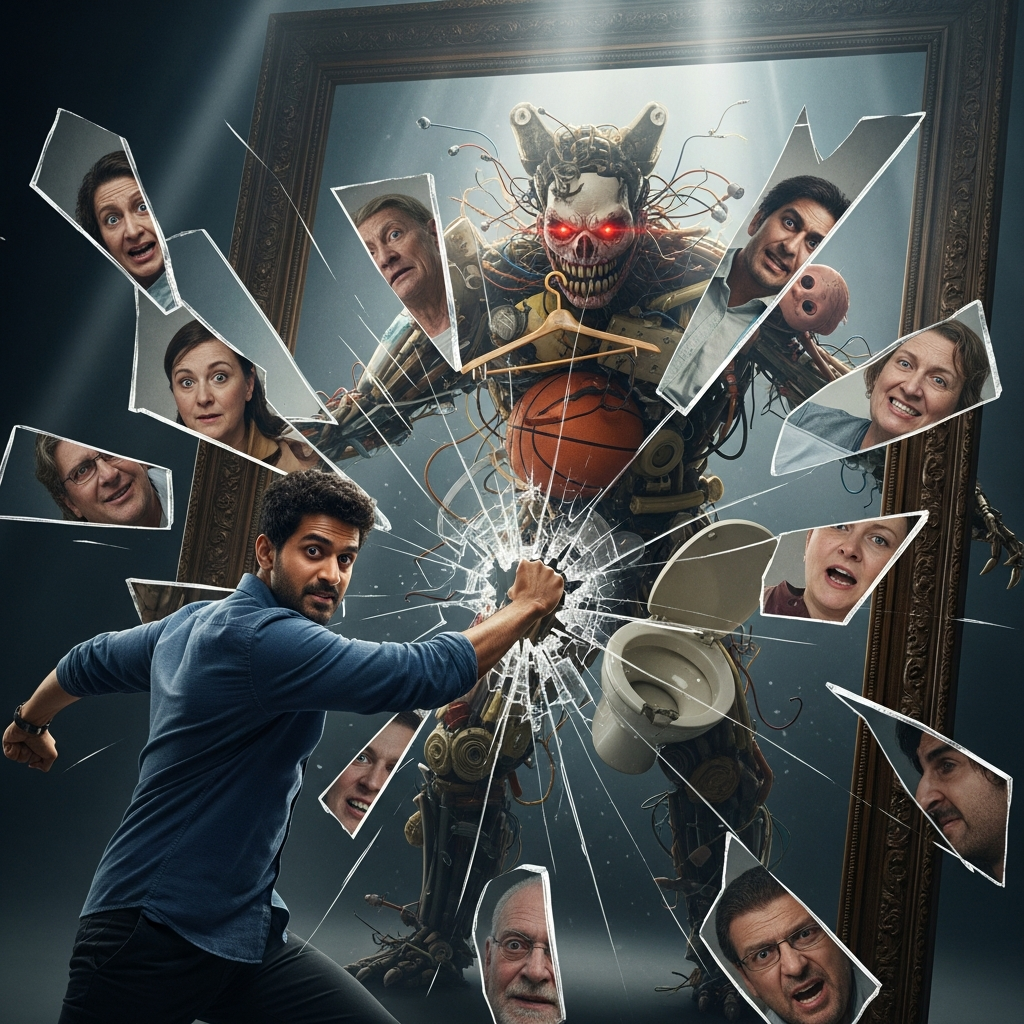
He burst into the master bathroom, seeking the cold clarity of water, but the faucets ran with a thick, silver mercury that hummed with a low frequency. Adesh looked into the mirror, bracing for the void, but what he saw was worse. A version of himself stood there, but it was composed of the house itself. Its skin was the peeling wallpaper; its eyes were the brass doorknobs; its hair was the black mold from the basement. The reflection reached out, its fingers pressing against the glass from the other side, leaving smears of grime. Adesh felt a sympathetic pressure on his own chest, a weight that threatened to collapse his lungs. The reflection began to speak, its voice sounding like grinding stones. ‘Why have you come back to a place that has finished with you?’ it asked. Adesh realized then that the house hadn’t just forgotten him; it had replaced him. It had taken his years of absence and filled the vacuum with a sentient malice. The glass began to crack, spider-webbing outward from the reflection’s touch. Each shard that fell away took a piece of Adesh’s memory with it—the smell of his mother’s perfume, the heat of a summer afternoon, the sting of a scraped knee. He was being hollowed out, turned into a vessel for the house to inhabit. He grabbed a heavy porcelain pitcher and shattered the mirror, but the pieces didn’t fall to the floor. They floated in the air, each one reflecting a different, distorted version of his face, mocking his attempt to remain whole in a fractured reality.
Scene 5
The Heart of the Hearth

Driven by a primal instinct, Adesh fled toward the basement—the dark, damp womb of the mansion. The stairs had transformed into a slide of slick, organic matter, and he tumbled down into a cavernous space that defied the exterior dimensions of the building. In the center sat the furnace, but it was no longer an appliance of iron and coal. It was a massive, glowing heart, bound by thick copper veins that pumped a glowing, amber fluid throughout the walls. This was the source of the erasure. Adesh saw his childhood toys—a wooden horse, a lead soldier—being fed into the furnace by unseen hands made of shadow. As they burned, he felt the corresponding parts of his soul vanish. He saw his birth certificate fluttering in the updraft, the ink glowing white-hot before turning to ash. ‘I am Adesh Ingale!’ he roared, the declaration a physical weapon against the encroaching darkness. He realized the house fed on the narrative of the self. If he could not be remembered, he would be the one who witnessed. He lunged toward the heart-furnace, grabbing a discarded iron poker. The heat was unbearable, blistering his skin, but the pain was a reminder of his existence. He began to strike at the copper veins, each blow causing the house to shriek in a high-pitched, metallic frequency. The walls buckled, and the ceiling began to weep a thick, black oil that tasted of salt and sorrow. He wasn’t just fighting for his life; he was fighting for the right to have ever lived at all.
Scene 6
The Sacrifice of Memory
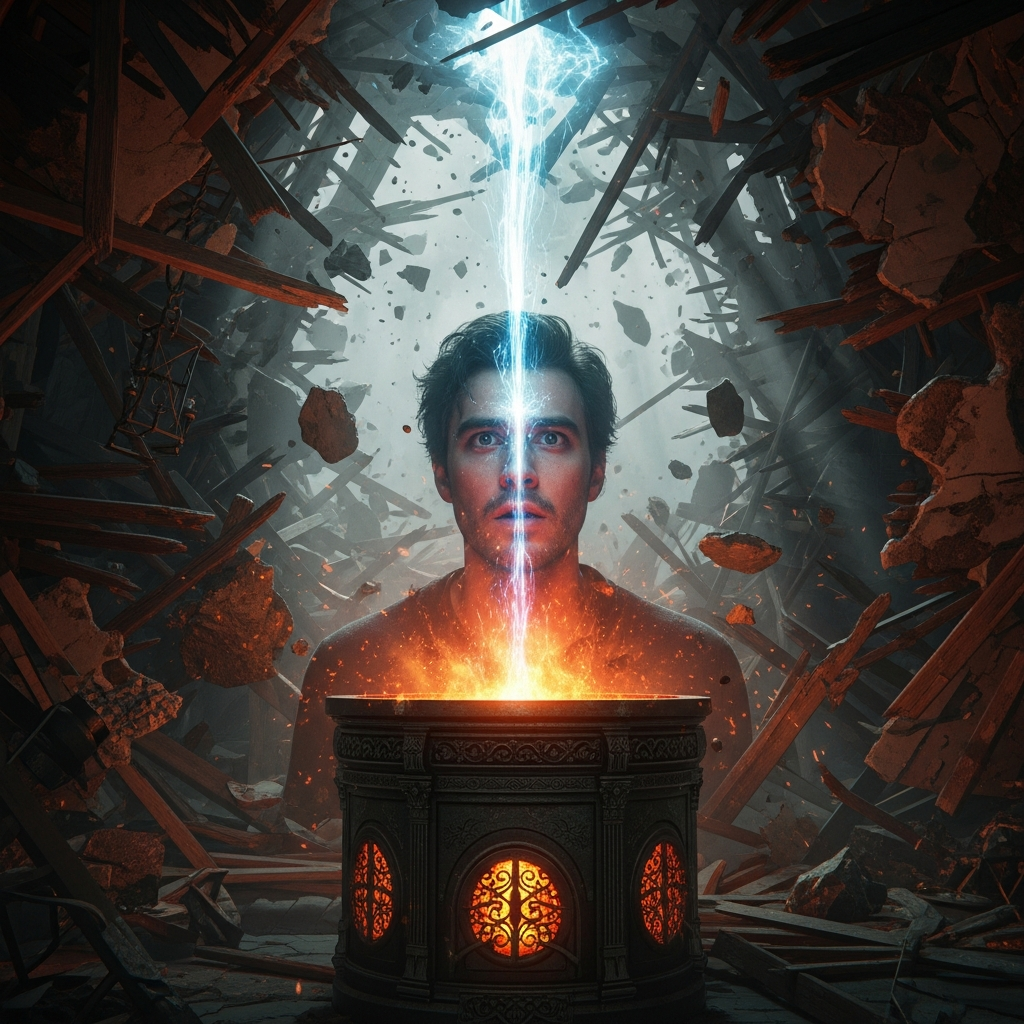
The house fought back with the ferocity of a cornered predator. The floorboards erupted like teeth, snapping at Adesh’s ankles. Shadowy figures—manifestations of everyone who had ever died within these walls—merged into a singular, towering mass of grief. Adesh was pinned against the pulsating furnace, the heat melting the very fabric of his coat. To kill the house, he realized he had to give it what it wanted, but on his own terms. He reached into the deepest, most sacred part of his mind—the memory of his mother’s face, the one thing the house hadn’t been able to fully mimic. He didn’t just remember it; he projected it, pouring the raw emotion of his love and loss into the furnace. It was a poison to the house’s cold, calculated erasure. The amber fluid in the veins turned a violent, bruised purple. The house began to convulse, the walls folding in on themselves like a collapsing cardboard box. Adesh felt his own identity flickering like a dying candle. He was giving away his most precious treasure to buy his freedom. The screaming of the mansion reached a deafening crescendo, a sound of wood splintering and stone grinding into dust. He saw the faceless portraits upstairs melting into nothingness as the logic of the house crumbled. In the center of the chaos, Adesh stood his ground, a silhouette of defiance against a backdrop of architectural suicide. He was losing himself to save himself, a paradox that burned brighter than the furnace’s fire.
Scene 7
The Morning of the Unwritten
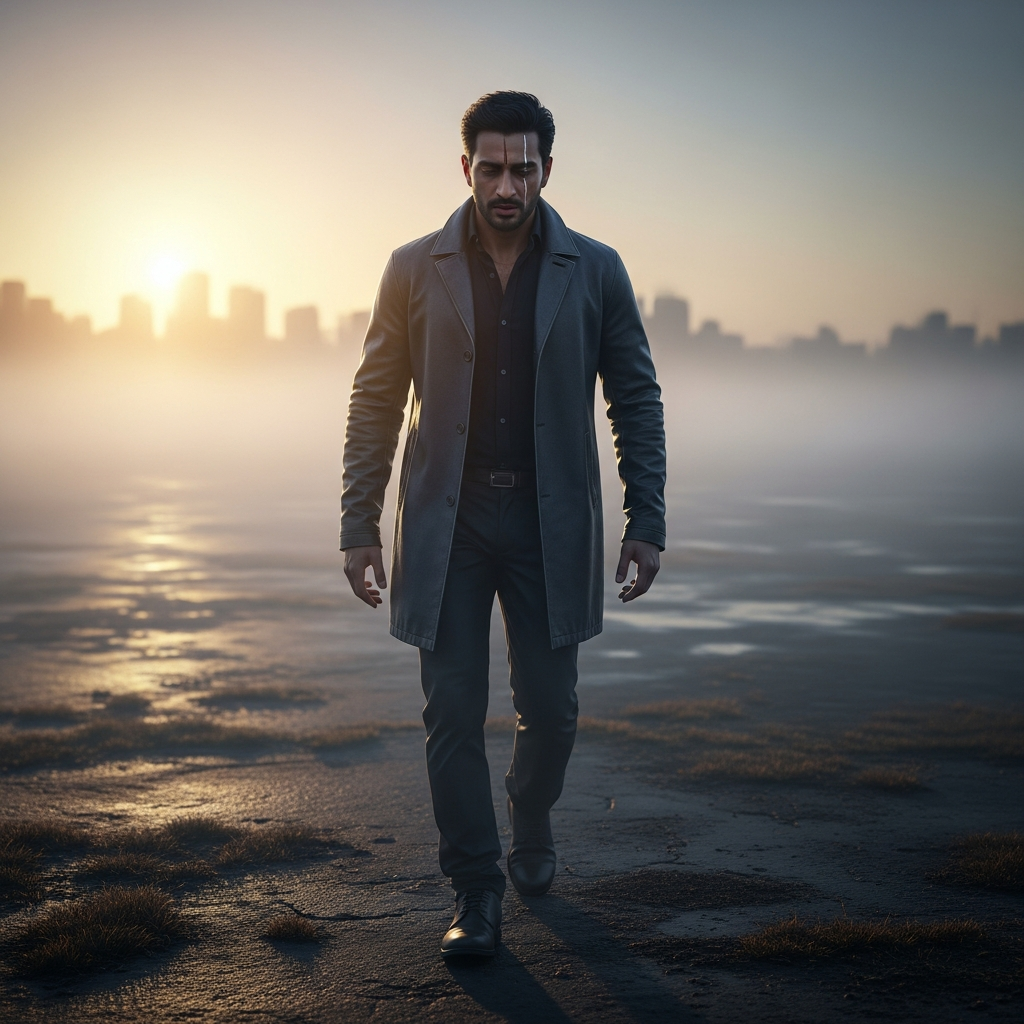
Adesh awoke on a bed of cold ash and wet grass. The sun was rising, a pale, indifferent disc in a grey sky. He looked behind him and saw nothing but an empty, overgrown lot. There was no mansion, no iron gate, no scorched earth. Only the silence of a place where nothing had existed for a long time. He reached into his pocket and found the silver locket. It was still empty, but when he looked at his reflection in a nearby puddle, his face was there—haggard, older, and marked by a thin, silver scar across his brow, but undeniably his. He couldn’t remember his mother’s name, and the details of his childhood were now a hazy blur of shapes and colors without a narrative string. The house had taken its toll; it had forgotten him, and in return, it had forced him to forget the foundations of his own soul. He stood up, his joints aching with the weight of a man who had survived a war no one else would ever believe in. He walked toward the road, his footsteps leaving light impressions in the dew. He had no home to return to and no past to guide him, but as he stepped onto the asphalt, he realized the terrifying beauty of his situation. The house was gone, and with it, the script of his life. He was a blank page, a man without a history, finally free to walk into a world that didn’t know him, carrying only the scars of the house that tried to eat his soul.