Scene 1
The Night the Lights Changed

Adesh Ingale stood on his balcony in the heart of the sleeping city, the scent of parched concrete and ozone thick in the humid night air. He looked up, expecting the familiar faint glimmer of the Big Dipper, but what he saw froze the marrow in his bones. The constellations were gone. In their place sat a grid of cold, pulsating octahedrons, glowing with an oily, iridescent sheen that didn’t cast light so much as it swallowed the shadows. There was no transition, no cosmic event reported on the news—just a sudden, brutal replacement. The air began to vibrate with a low-frequency thrum that Adesh felt in his molars, a rhythmic pulsing that suggested the sky was no longer a vacuum but a living, breathing mechanism. He reached for his binoculars, his hands trembling as he focused the lenses. Up close, the ‘stars’ weren’t burning balls of gas; they were complex, rotating structures of glass and obsidian, etching themselves into the fabric of reality. Adesh felt a wave of nausea wash over him as he realized the silence of the city wasn’t peaceful; it was the silence of a tomb. The familiar sounds of distant traffic and late-night sirens had vanished, replaced by the rhythmic clicking of the geometric sky. He felt a primal urge to scream, but the air felt too heavy, as if the new stars were increasing the atmospheric pressure, pinning him to the balcony. He was the only one awake to witness the grand theft of the universe, and the weight of that observation felt like a physical burden on his chest.
Scene 2
The Hum of the Void
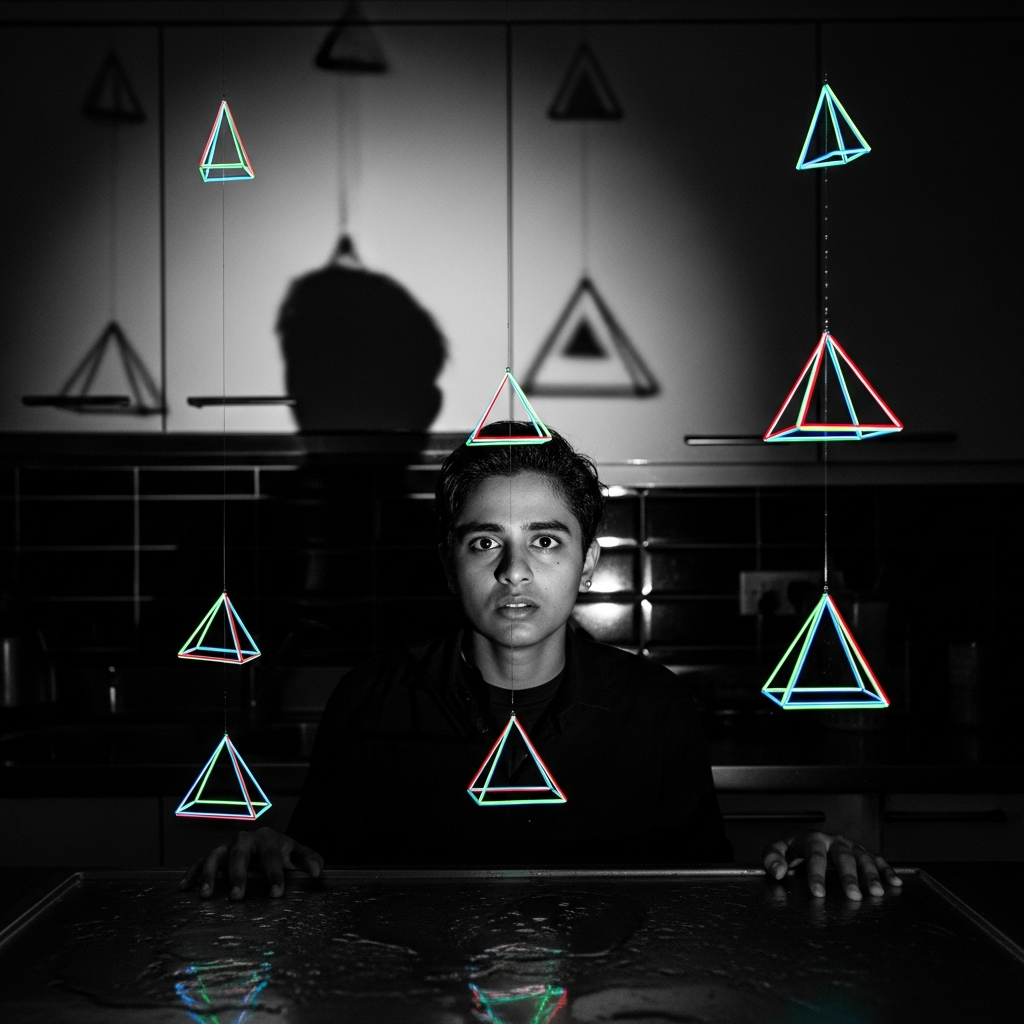
By the second hour, the hum had become a physical presence. Adesh Ingale retreated inside, but the walls of his apartment seemed to offer no sanctuary. The vibration was coming from everywhere—the floorboards, the water pipes, even the air itself. He turned on his television, but every channel showed the same thing: a static-filled screen that slowly resolved into the same rotating geometric shapes he had seen in the sky. He tried to call his brother, but the phone emitted only a rhythmic clicking that matched the pulse of the octahedrons. Adesh paced his living room, the taste of copper filling his mouth. He noticed his shadow was wrong; it didn’t flow from the lamps in his room, but seemed to be pulled toward the ceiling, stretching upward as if trying to reconnect with the artificial heaven above. Every time he closed his eyes, he saw the shapes burned into his retinas, glowing with a malevolent intelligence. He began to realize that this wasn’t an alien invasion in the traditional sense; it was a fundamental rewrite of the laws of physics. The ‘New Stars’ were broadcasting a signal that was rewriting his very cells. He felt a strange itching beneath his skin, a sensation of something crystalline beginning to form in his blood. He scrambled to his kitchen, splashing cold water on his face, but the water in the sink didn’t splash—it moved in perfect, angular droplets, forming tiny pyramids in the basin before draining away in a synchronized spiral. Adesh clutched the edge of the counter, his knuckles white, as he realized that the world he knew was being deleted, line by line.
Scene 3
The Somnambulist Parade
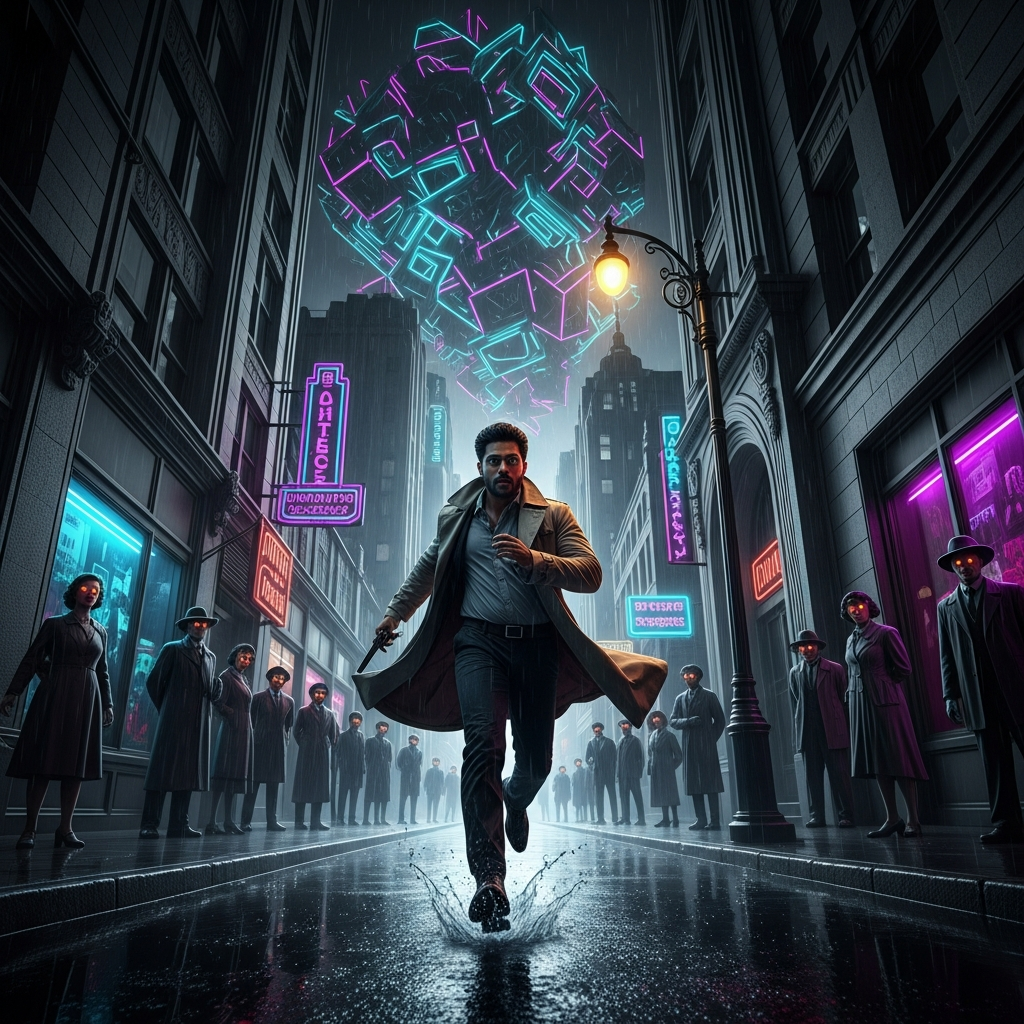
Desperation drove Adesh Ingale out into the street. He needed to know if he was truly alone in his sanity. The pavement felt like velvet under his feet, the texture of the world softening as the geometric sky hardened. He found his neighbors standing in the middle of the intersection, their heads tilted back at an impossible angle. Their eyes were wide, the pupils replaced by tiny, glowing octahedrons that mirrored the sky. They weren’t screaming; they were chanting in a language that sounded like grinding metal. ‘The Architecture is complete,’ they whispered in unison, their voices devoid of emotion. Adesh grabbed his neighbor, Mr. Henderson, by the shoulders and shook him, but the man felt hollow, as if his internal organs had been replaced by the same humming glass that now occupied the heavens. Mr. Henderson didn’t look at him; he simply pointed upward with a finger that had grown an extra joint. Adesh looked up and saw that the geometric sky was lowering. The ‘stars’ were descending, weaving themselves into a canopy of light that threatened to crush the skyscrapers. The air grew cold, a dry, artificial chill that smelled of sterile laboratories and old paper. Adesh realized the people weren’t being killed; they were being repurposed, turned into living antennas for the new reality. He ran, his heart hammering against his ribs like a trapped bird, seeking a place where the sky couldn’t see him. He found himself heading toward the old subway tunnels, the only place where the weight of the New Stars felt less oppressive, though even there, the walls were beginning to pulse with a faint, rhythmic glow.
Scene 4
The Glitch in the Basement
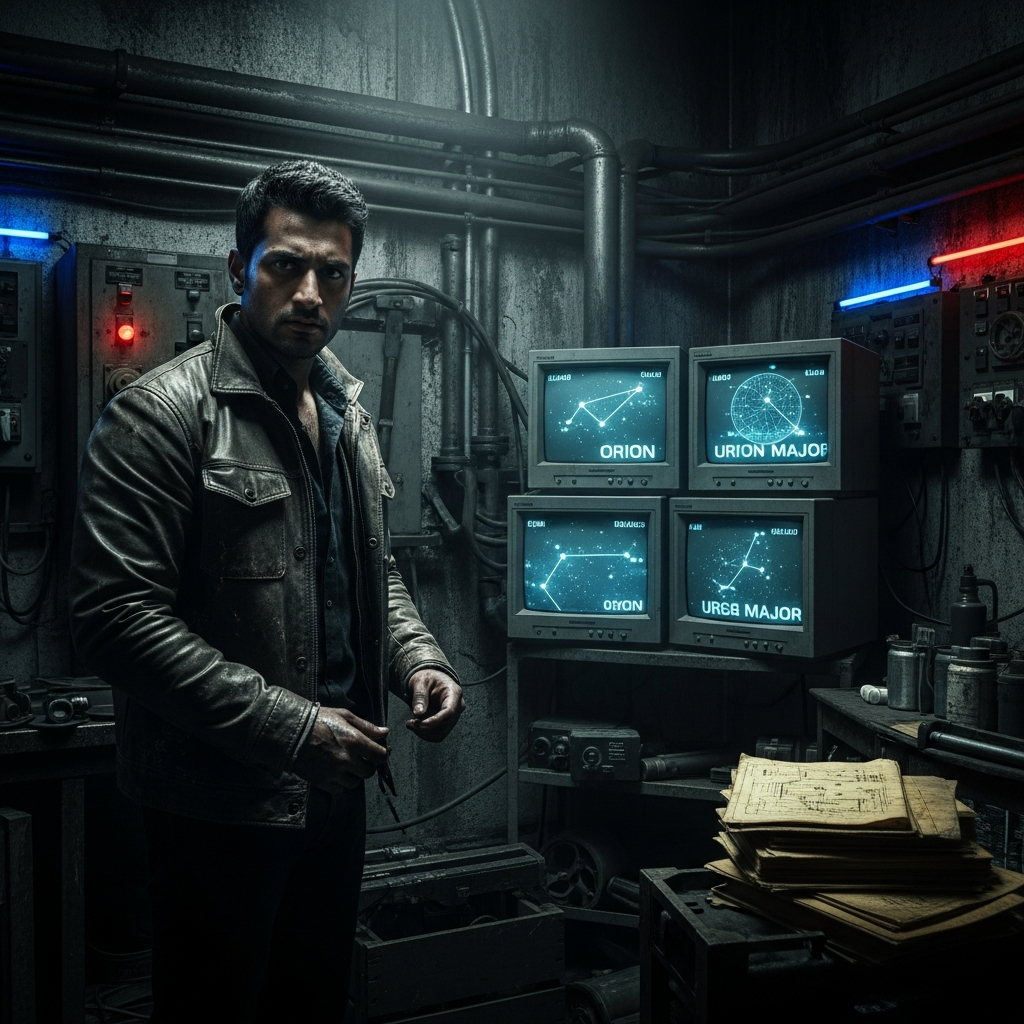
Deep within the bowels of the city’s oldest subway station, Adesh Ingale found a pocket of resistance. It wasn’t a military bunker or a rebel hideout, but a physical glitch—a maintenance room where the old stars still flickered on a cracked security monitor. The room was shielded by layers of lead and ancient, unpowered machinery that seemed to disrupt the signal from the sky. For the first time in hours, the hum in Adesh’s teeth subsided. He sat on the floor, gasping for air that didn’t taste like ozone. On the monitor, he saw a grainy loop of the sky as it had been only yesterday: messy, chaotic, and beautiful. He realized that the New Stars were a perfectionist’s nightmare, a cosmic correction intended to eliminate the ‘noise’ of biological life. He began to look through the journals of the station’s former caretaker, finding frantic notes about ‘The Celestial Architect’ and ‘The Great Formatting.’ It wasn’t just the stars that were being replaced; it was history itself. Adesh looked at his own hands and saw that the crystalline growth in his veins had paused, retreating slightly under the flickering fluorescent light of the basement. He understood then that the New Stars required observation to function; they were a quantum reality that needed to be witnessed to solidify. If he could find a way to broadcast a different observation, a memory of the old world, he might be able to create a ripple in the new architecture. But to do that, he would have to leave the safety of the basement and climb the highest tower in the city, exposing himself to the full force of the transformation.
Scene 5
Ascension of the Last Observer
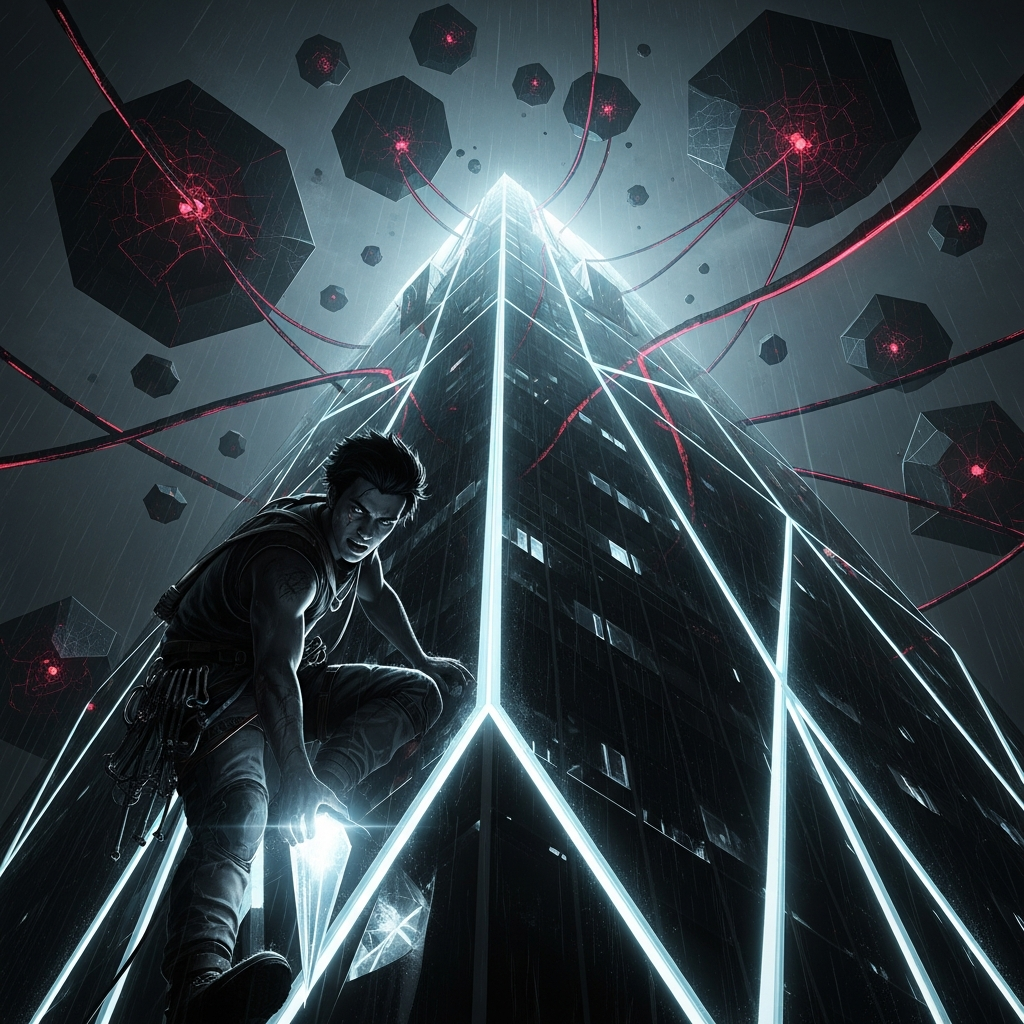
Adesh Ingale emerged from the tunnels with a heavy brass telescope strapped to his back and a mind filled with the chaotic memories of a dying world. The city had become a kaleidoscope of shifting angles. Buildings were no longer made of brick and mortar but of translucent, glowing panes that shifted like a rubik’s cube. He began to climb the central spire of the Zenith Tower, the stairs turning into a dizzying spiral of non-Euclidean geometry. With every step, the pressure increased, the New Stars roaring in his ears like a thousand jet engines. The air was so thin now that he could see the individual threads of light connecting the stars to the ground—the tethers of the new reality. Adesh forced himself not to look directly at the sky, focusing instead on the rhythmic movement of his own breath, a messy, organic sound that defied the geometric perfection around him. He saw the ‘Somnambulists’ below, thousands of them, merging into the foundations of the new world, their bodies becoming the pillars of a cosmic cathedral. He felt the temptation to surrender, to let the crystalline structure take over his heart and find peace in the order of the octahedrons. But he remembered the smell of rain on hot asphalt, the taste of a bitter orange, and the messy, imperfect love of his family. He used those memories as an anchor, a psychic shield against the overwhelming logic of the sky. By the time he reached the summit, his clothes were tattered and his skin was glowing with a faint blue light, but his eyes remained human, burning with a defiant, messy fire.
Scene 6
The Sky Peels Back
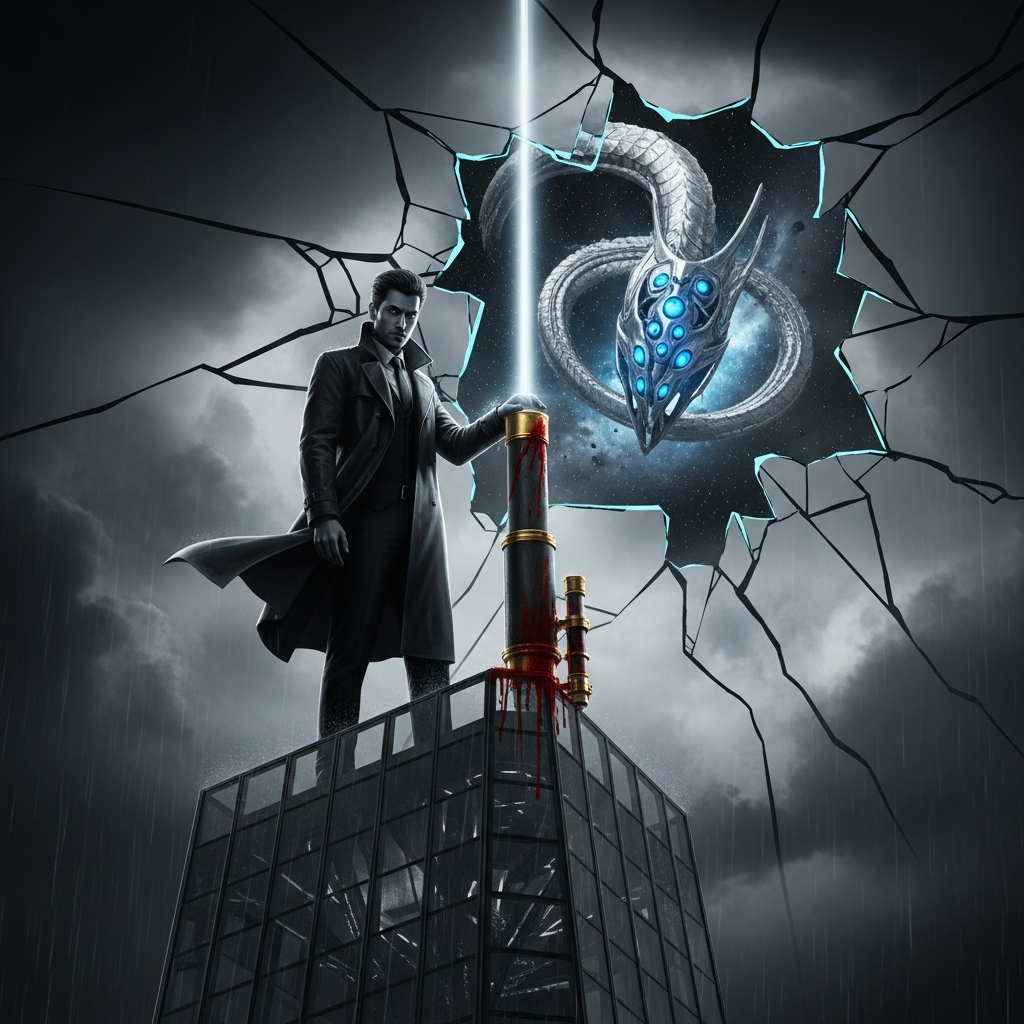
At the peak of the tower, Adesh Ingale set his telescope not toward the New Stars, but toward the gaps between them. He realized the octahedrons weren’t stars at all; they were pixels on a screen, a thin veil draped over the corpse of the universe. He shouted at the sky, his voice a raw, jagged edge in the silent perfection. ‘I see you!’ he screamed, and the sky flinched. A crack appeared in the geometric canopy, a jagged line of absolute darkness that didn’t pulse or hum. Behind the veil, Adesh saw the truth: the ‘Celestial Architect’ was a vast, multi-dimensional entity that looked like a tangled web of silver nerves, feeding on the energy of the worlds it ‘formatted.’ It wasn’t replacing the stars to improve the universe; it was harvesting the entropy of biological chaos. The entity noticed him—a single, unassimilated point of observation. A beam of pure, logical light descended from the largest octahedron, striking the tower and turning the metal into glass. Adesh didn’t flinch. He aimed the telescope’s lens, which he had coated with his own blood—the ultimate biological impurity—at the heart of the entity. The blood acted as a prism, refracting the logical light into a chaotic spectrum of colors that the architecture couldn’t process. The sky began to scream, a sound like a billion violins snapping at once. The octahedrons began to shatter, falling like glass rain over the transforming city. Adesh felt his own body beginning to dissolve, his atoms caught in the crossfire between the perfect grid and the chaotic blood-light.
Scene 7
The New North Star
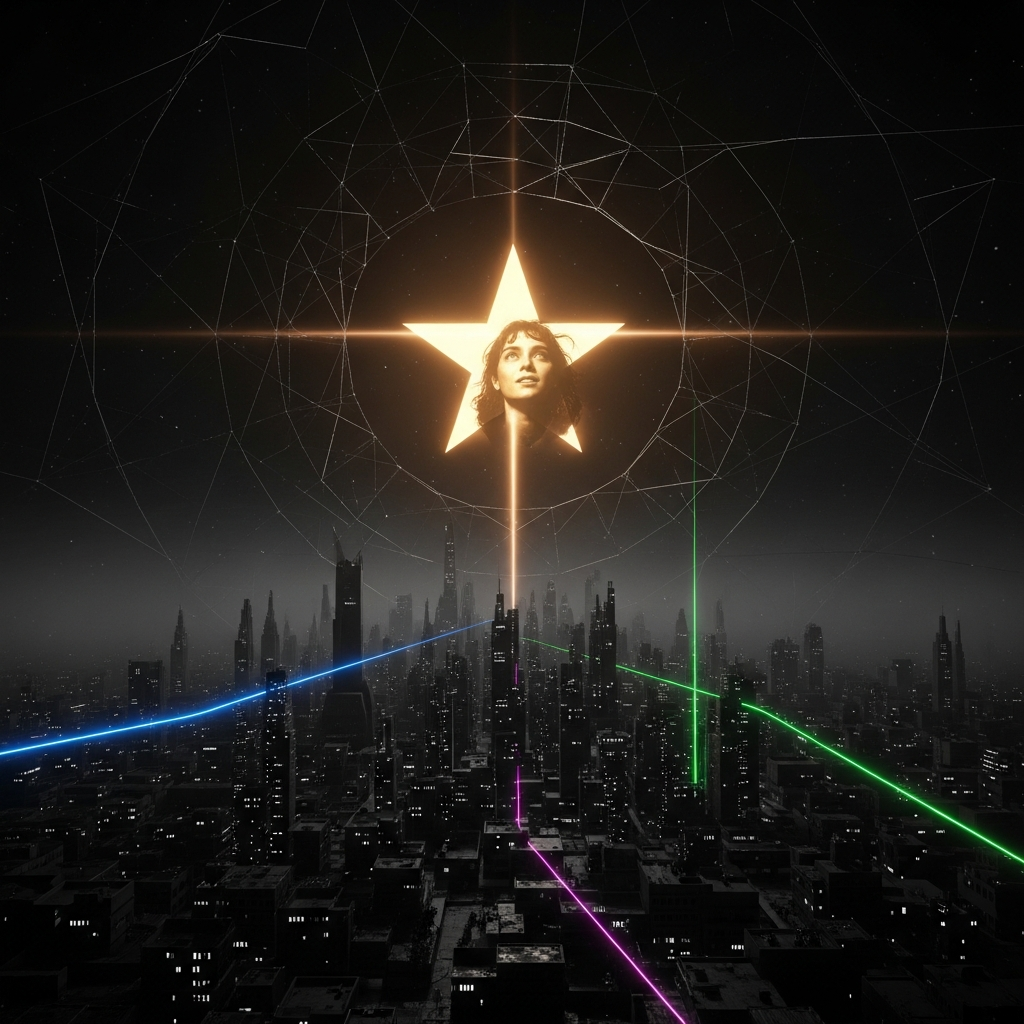
The resolution was not a return to the old world, but a stalemate that saved the soul of reality. As the geometric sky shattered, it didn’t vanish; instead, it fused with Adesh’s final, defiant observation. He felt himself being pulled upward, not as a victim, but as a component. He was no longer a man of flesh and bone, but he wasn’t a cold octahedron either. He became a bridge—a single, brilliant point of light that burned with a warm, amber hue amidst the remaining silver grid. Adesh Ingale had become the New North Star, a permanent glitch in the Architect’s design. Below him, the city stopped its transformation. The buildings remained strange and angular, but the people woke up, the glowing octahedrons fading from their eyes. They looked up and saw a sky that was half-logic and half-chaos, a tapestry of silver geometry punctuated by a single, pulsing golden star that felt like a heartbeat. The Architect retreated, unable to complete the formatting as long as Adesh remained as a witness. Adesh looked down at the world he had saved, seeing the messy, beautiful lives beginning to stir once more in the ruins of the geometric city. He was alone in the cold vacuum of the new heavens, but he was not lonely. He was the guardian of the horizon, the reminder that as long as one person remembers the chaos of the stars, the universe can never be truly tamed. The hum of the void was replaced by a new sound: the silent, steady pulse of a human heart beating at the center of the galaxy.