Scene 1
The Threshold of Silence
Adesh Ingale stood before the towering iron gates of the Blackwood Estate, the air thick with the scent of ozone and decaying lilies. As he turned the rusted key, the heavy oak doors groaned, not in protest, but in what sounded like a weary sigh of relief. Inside, the grand foyer was a cathedral of dust motes dancing in the pale moonlight. Adesh ran his hand along the wainscoting, noticing the unusual warmth of the wood. It didn’t feel like dead timber; it felt like a dormant pulse was thrumming beneath the varnish. The wallpaper, a faded Victorian damask, seemed to ripple as his candle flickered, the patterns shifting like a school of fish in dark water. He dismissed it as a trick of the light, but as he moved deeper into the hall, the silence began to layer itself with a low, sub-audible hum. It was the sound of a thousand forgotten breaths held in unison. Every step Adesh took left a faint, glowing footprint that lingered for seconds before being swallowed by the floorboards. The house wasn’t just old; it was expectant. He felt the weight of history pressing against his temples, a physical pressure that suggested the very structure was bloated with the secrets of those who had lived and died within its confines. Adesh checked his watch, but the hands were spinning backward, ticking with a frantic, metallic heartbeat that mirrored his own rising pulse. He was no longer just an architect; he was a guest in a house that had been waiting for a witness to its long-stored sorrow.
Scene 2
The Graphite Weeping
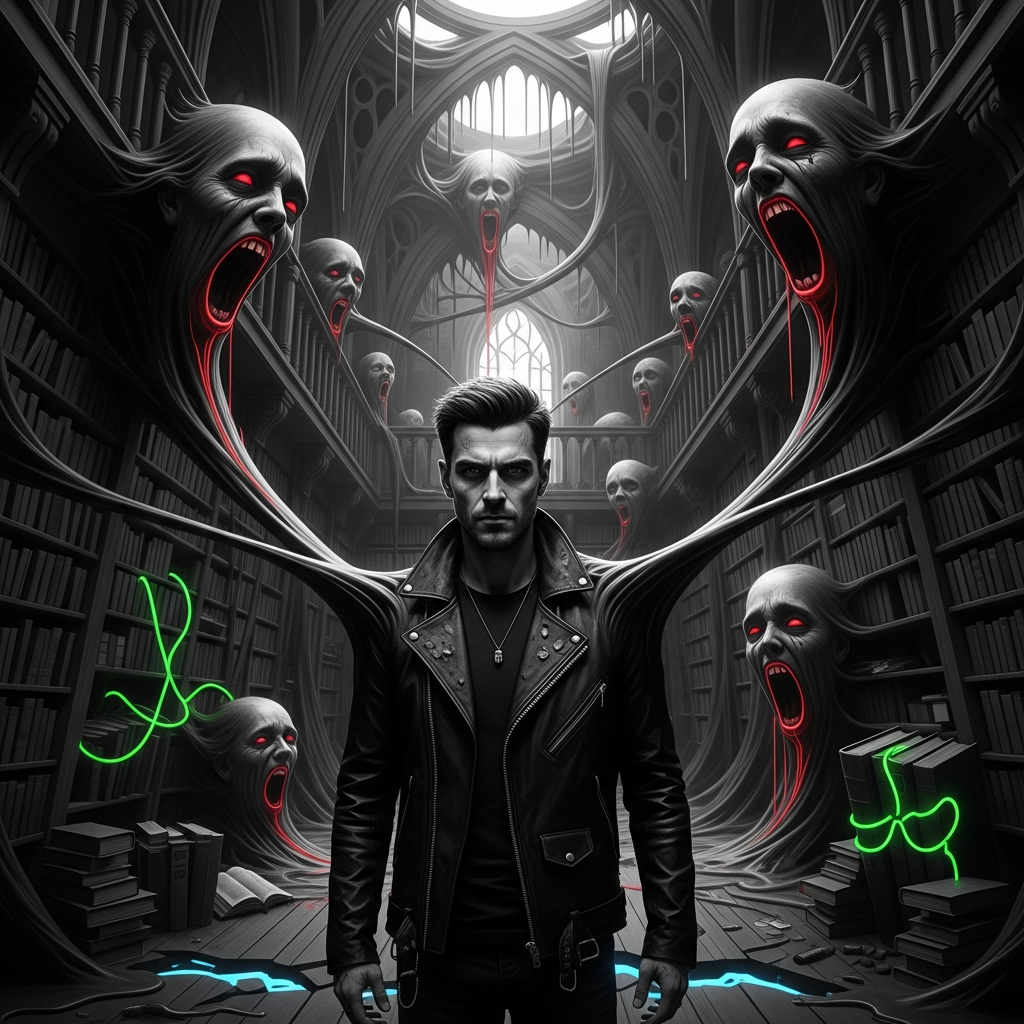
By the second hour, the architecture began to betray its static nature. Adesh found himself in the library, where the damp stains on the ceiling began to coalesce into recognizable shapes. Liquid graphite bled from the crown molding, tracing the outlines of faces he didn’t recognize—faces frozen in mid-scream. He reached out to touch a particularly vivid smudge, and the plaster felt soft, yielding like human flesh. As his finger made contact, a surge of foreign emotion flooded his mind: a sudden, overwhelming grief for a woman named Elena who had died in 1894. The walls weren’t just showing him images; they were discharging sensory data. Adesh recoiled, his hand stained with a soot-like substance that smelled of charcoal and old tears. Suddenly, the bookshelves groaned, the wood grain twisting into the shape of grasping hands. The very geometry of the room began to warp, the corners stretching into impossible angles that defied Euclidean logic. Adesh tried to flee, but the door handle felt like a warm, bony wrist that twisted back against his grip. The house was beginning to remember its former occupants, and it was using the moisture in the air to paint their tragedies onto the canvas of reality. ‘Stay,’ the walls whispered, the sound vibrating through his teeth. ‘Help us remember everything.’ Adesh clutched his head, the cacophony of a century’s worth of arguments and laughter erupting from the floorboards beneath him.
Scene 3
The Living Tapestry
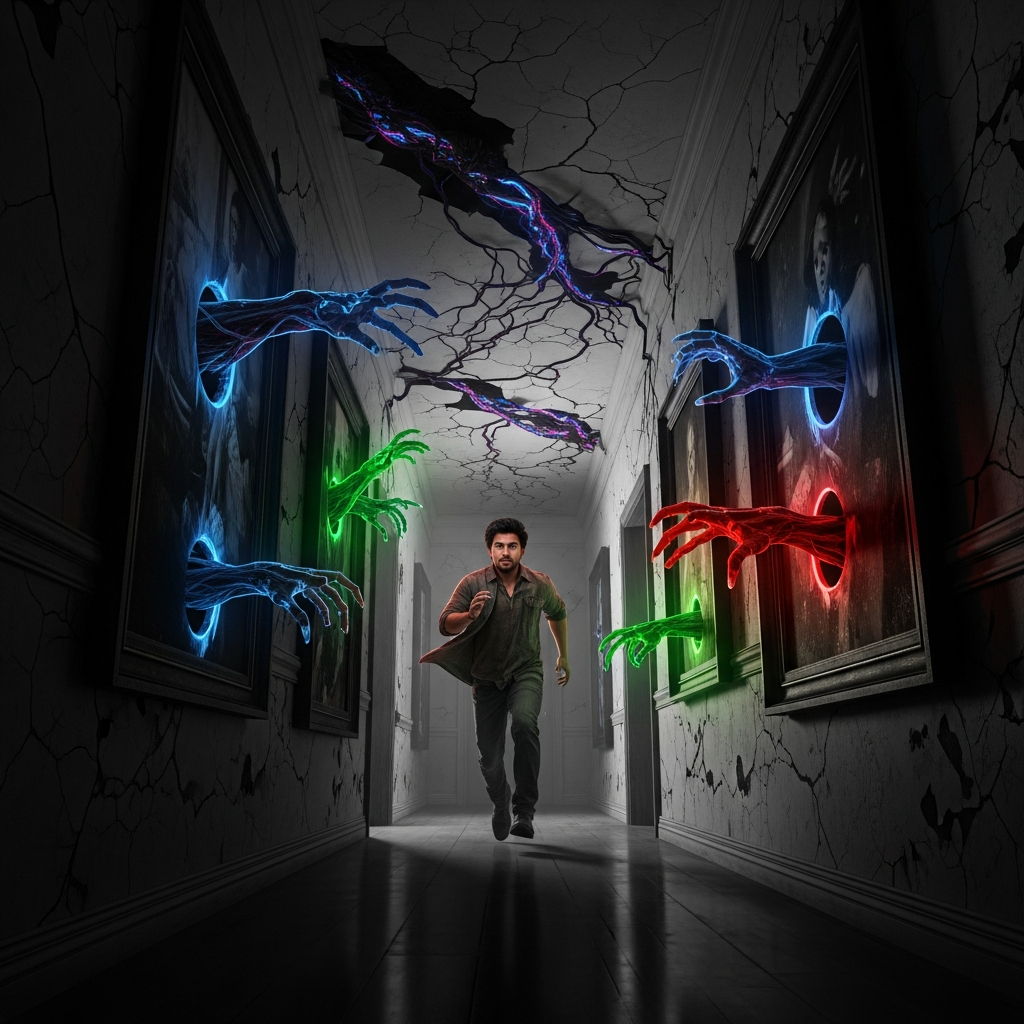
Adesh fled to the gallery, but the hallway seemed to elongate, turning a twenty-foot walk into a mile-long marathon of shifting perspectives. The portraits on the walls were no longer oil on canvas; they were windows into the past. He saw a man sitting by a fireplace, the heat from the painted fire radiating into the hallway, singeing the hair on Adesh’s arms. He watched in horror as a painted figure reached out from the frame, its two-dimensional hand becoming three-dimensional as it clawed at his coat. The protagonist realized that the house was a giant organic recorder, and it had reached its storage capacity. It was leaking. Every floorboard he stepped on released a puff of grey vapor that carried the scent of a specific dinner from 1942 or the copper tang of a long-ago injury. Adesh tripped, falling against a velvet-lined wall that felt wet and pulsating. He heard the sound of a heartbeat—massive, slow, and rhythmic—thumping within the masonry. The house was trying to integrate him, to turn his own fresh memories into new layers of insulation. He saw his own childhood home beginning to manifest at the end of the hall, a hallucination made of plaster and lath. The wallpaper began to peel back like skin, revealing a network of pulsating veins made of copper wiring and glowing nerves. The boundary between the observer and the observed was dissolving in a surreal display of architectural biology.
Scene 4
The Absorption of Identity
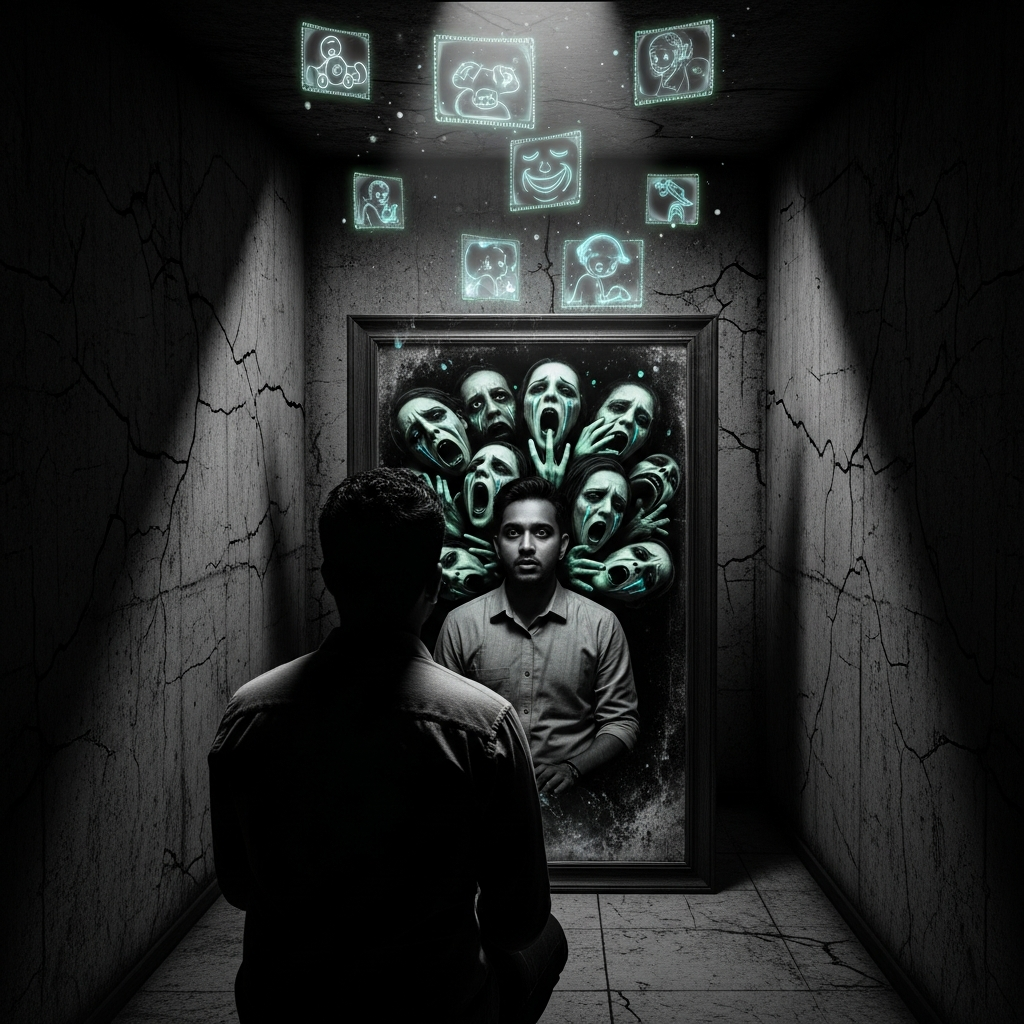
Adesh found himself in the master bedroom, where the ceiling was sagging like a heavy womb. He looked into the vanity mirror, but his reflection wasn’t his own; it was a composite of everyone who had ever looked into that glass. His face flickered between an old man, a young girl, and a terrified servant. He tried to speak, but his voice came out as a chorus of a dozen different accents. The walls began to weep a thick, translucent resin that smelled of pine and ancient dust, slowly coating the floor and trapping his boots. He realized the house wasn’t just remembering; it was hungry for new data. It wanted his memories of the city, his knowledge of the outside world, and his very soul to fill the gaps in its crumbling structure. Adesh fought against the lethargy creeping into his limbs. He saw his own mother’s face forming in the stucco above the bed, her eyes wide with a simulated concern that was actually a lure. The room was shrinking, the walls moving inward with the slow, inevitable pressure of a closing fist. Every memory he held dear was being ripped from his mind and projected onto the walls in vibrant, terrifying colors. He saw his first heartbreak, his graduation, and his father’s funeral etched into the molding in agonizing detail. The house was stripping him bare, turning his biography into its new interior design.
Scene 5
The Architect’s Counter-Strike
Visual Synchronization Offline
Desperation fueled a spark of clarity in Adesh’s mind. As a restoration architect, he understood the structural integrity of the house better than the house understood itself. He realized that the ‘memories’ were a form of psychic mold, and mold required a specific environment to thrive. He grabbed a heavy brass fire poker and began to strike at the ‘nodes’ where the memories seemed most concentrated—the joints and the load-bearing beams where the energy gathered. With every strike, the house let out a literal scream, a high-pitched frequency that shattered the windows. Adesh targeted the main chimney breast, the symbolic heart of the home. As he swung, the plaster erupted in a spray of white dust and golden sparks. The images on the walls began to flicker and distort like a failing film projector. ‘I am not your archive!’ Adesh roared, his voice finally reclaiming its singular tone. He began to chant the dimensions of the room, using the cold hard facts of geometry to repel the surreal invasion. He visualized blueprints—clean, white lines on blue paper—to overwrite the chaotic visions of the walls. The house fought back, the floor liquefying into a swamp of tar-like memory, but Adesh stood his ground, anchoring himself to the reality of physics. He was re-coding the space, asserting his will over the sentient masonry.
Scene 6
The Climax: The Memory Storm

The house unleashed its final defense—a memory storm. The air in the room became a whirlwind of translucent photographs, whispered secrets, and discarded emotions. Adesh was buffeted by the physical weight of a thousand tragedies. He saw the house’s original architect, a man driven mad by the same voices, trying to burn the place down. The flames of that memory felt real, the heat blistering Adesh’s skin even though no fire actually burned. He realized the house was stuck in a loop of its own creation. To escape, he had to give it a memory it couldn’t process: the concept of an ending. Adesh closed his eyes and projected the most powerful image he could muster—the total demolition of the estate, the sound of the wrecking ball, the dust returning to the earth, and the silence of the void. He poured his understanding of entropy into the walls, feeding the house the concept of its own inevitable demise. The walls began to crack, not just the plaster, but the very essence of the structure. The glowing veins turned grey and brittle. The screams of the past reached a deafening crescendo before suddenly cutting to a terrifying, absolute silence. The house trembled, its foundations shaking as it tried to digest the idea of non-existence. Adesh felt himself being expelled, the air pressure shifting violently as the house tried to vomit out the intruder who brought the gift of death.
Scene 7
The Echo of the Void
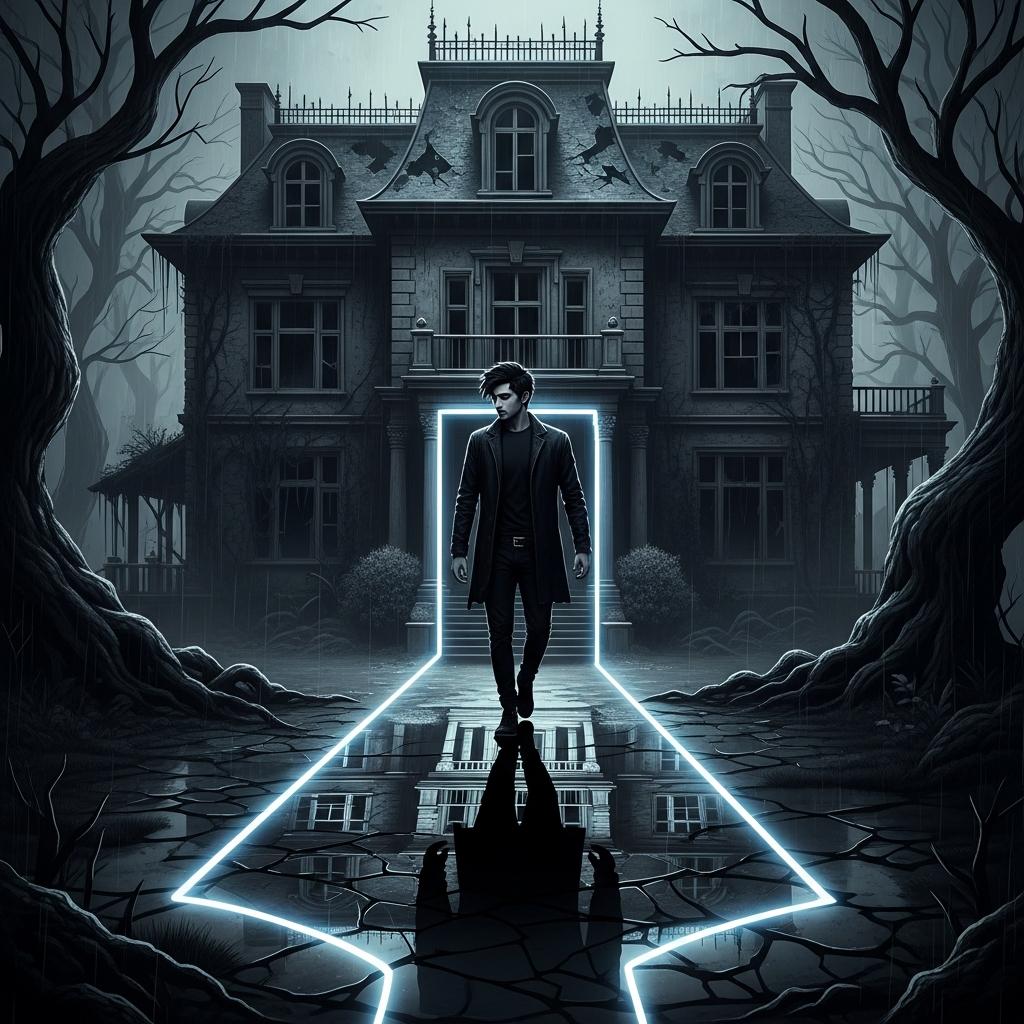
Adesh Ingale stumbled out of the front doors and collapsed onto the overgrown lawn. Behind him, the Blackwood Estate stood silent once more, but it had changed. The windows were no longer dark and watchful; they were hollow and blind. The heavy atmosphere of the grounds had dissipated, replaced by a cold, neutral breeze. Adesh looked at his hands; they were stained with a permanent grey dust that refused to wash away, a literal mark of the house’s memory. As he walked toward the gates, he looked back one last time. The house appeared smaller, more fragile, like a skeleton bleached by the sun. It no longer remembered; it had been wiped clean, a tabula rasa of stone and wood. However, as Adesh reached his car, he heard a faint sound from within his own mind—the distinct click of a door closing and the soft, familiar hum of the house’s pulse. He realized with a shudder that he hadn’t just escaped the house; he had carried a piece of its architecture with him. In the years to come, he would find that his own apartment would start to grow Victorian moldings, and his own walls would begin to whisper in the voices of the people he had met in the dark. The walls had stopped remembering the past, but they had started remembering him. Adesh drove away, a permanent resident of a house that now lived inside his own soul.